
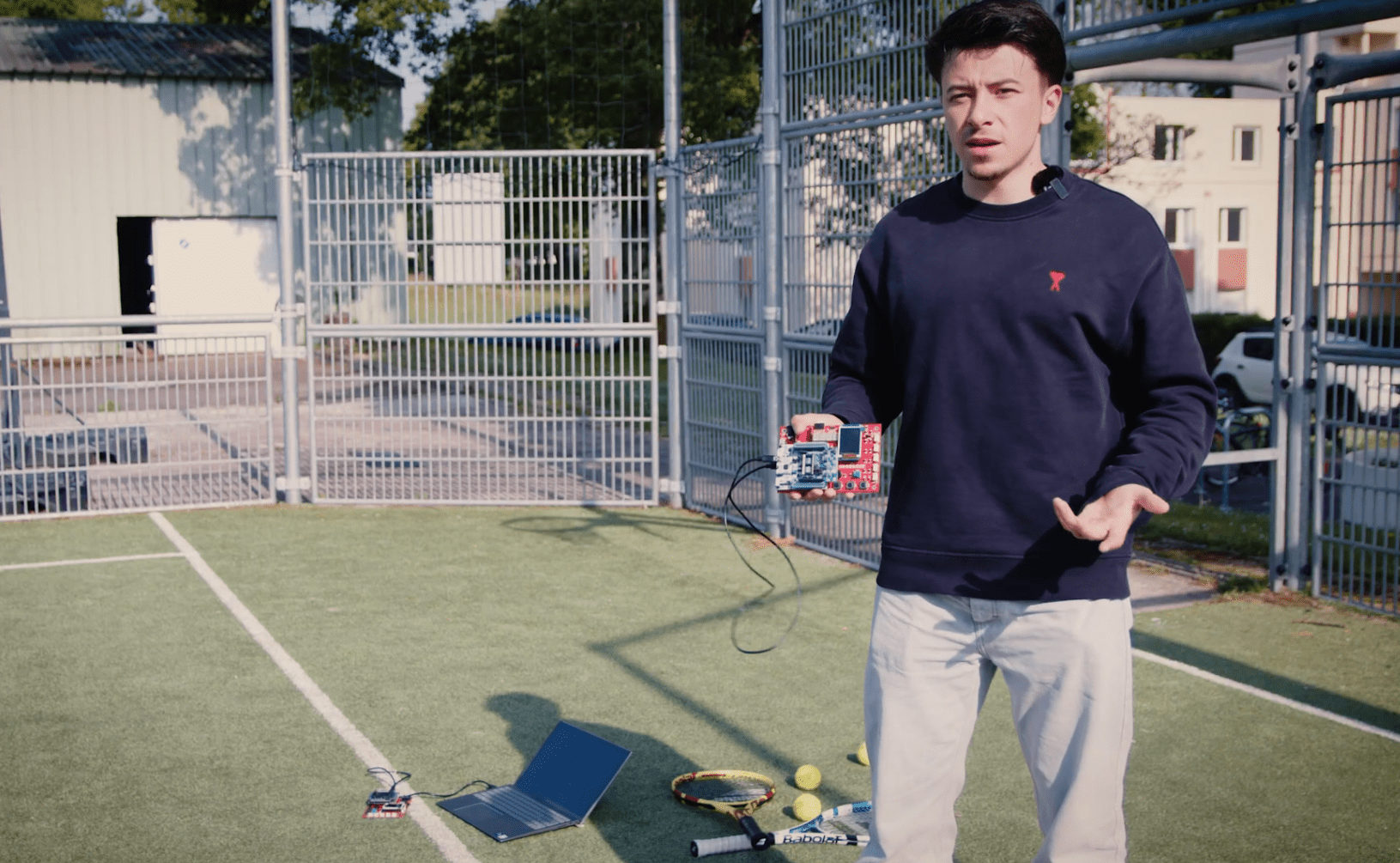
An year 4 project close to real-world conditions
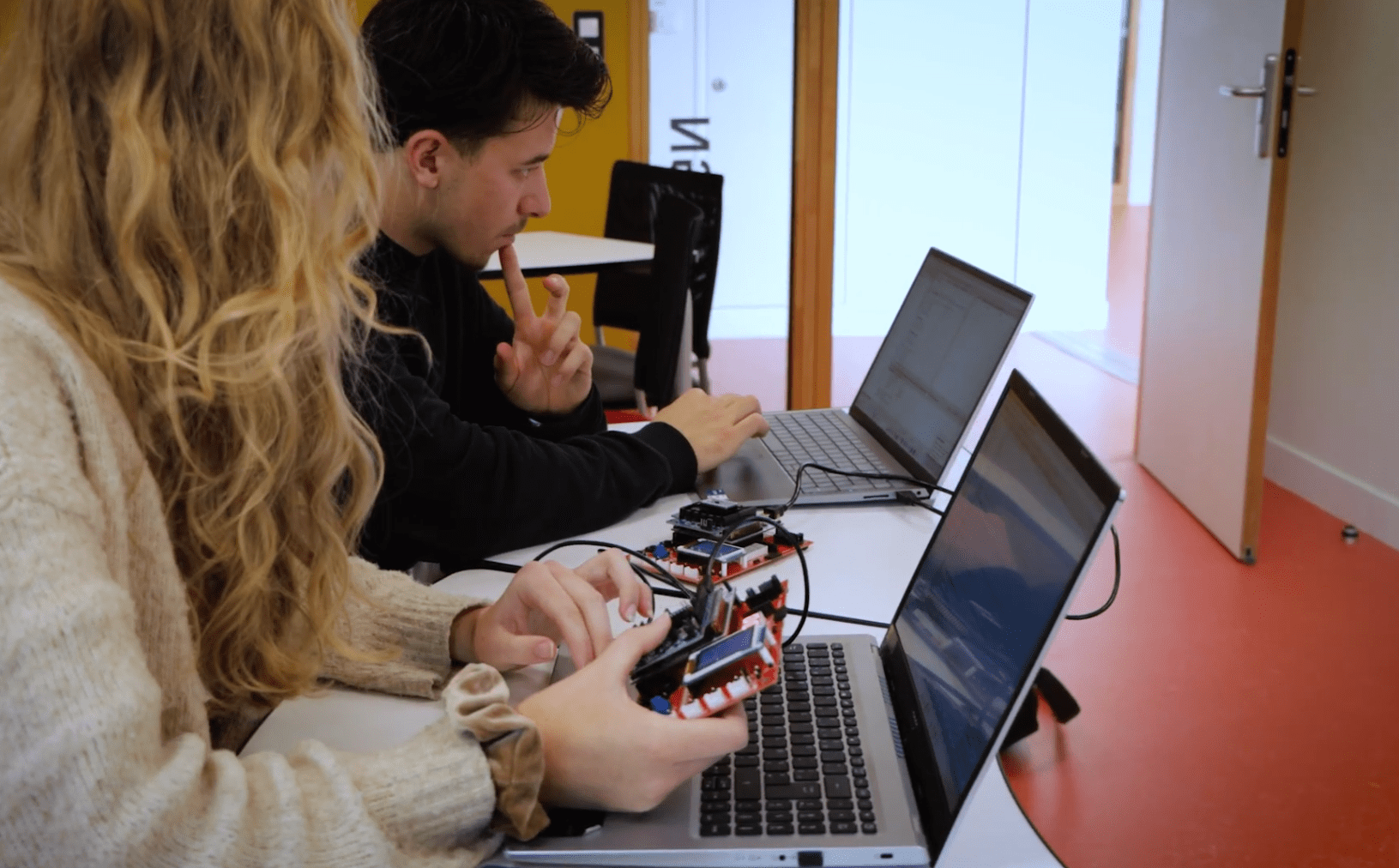
The M1 project is a key milestone in the engineering curriculum. Spanning several weeks, it is based on supervised work guided by a faculty member and structured around specifications, technical constraints, and a defined budget.
The goal is to enable students to apply their skills in a context similar to an industrial project: exploring solutions, selecting components, testing, and continuous improvement.
Within this framework, the students chose to focus on motion recognition using inertial sensors and embedded artificial intelligence.
A progressive approach: from traditional methods to AI
The project follows a step-by-step methodology, starting with simple solutions to better understand their limitations.
The first stage involves developing a step detection system without artificial intelligence. This approach highlights certain inaccuracies, particularly with varied or less pronounced movements.
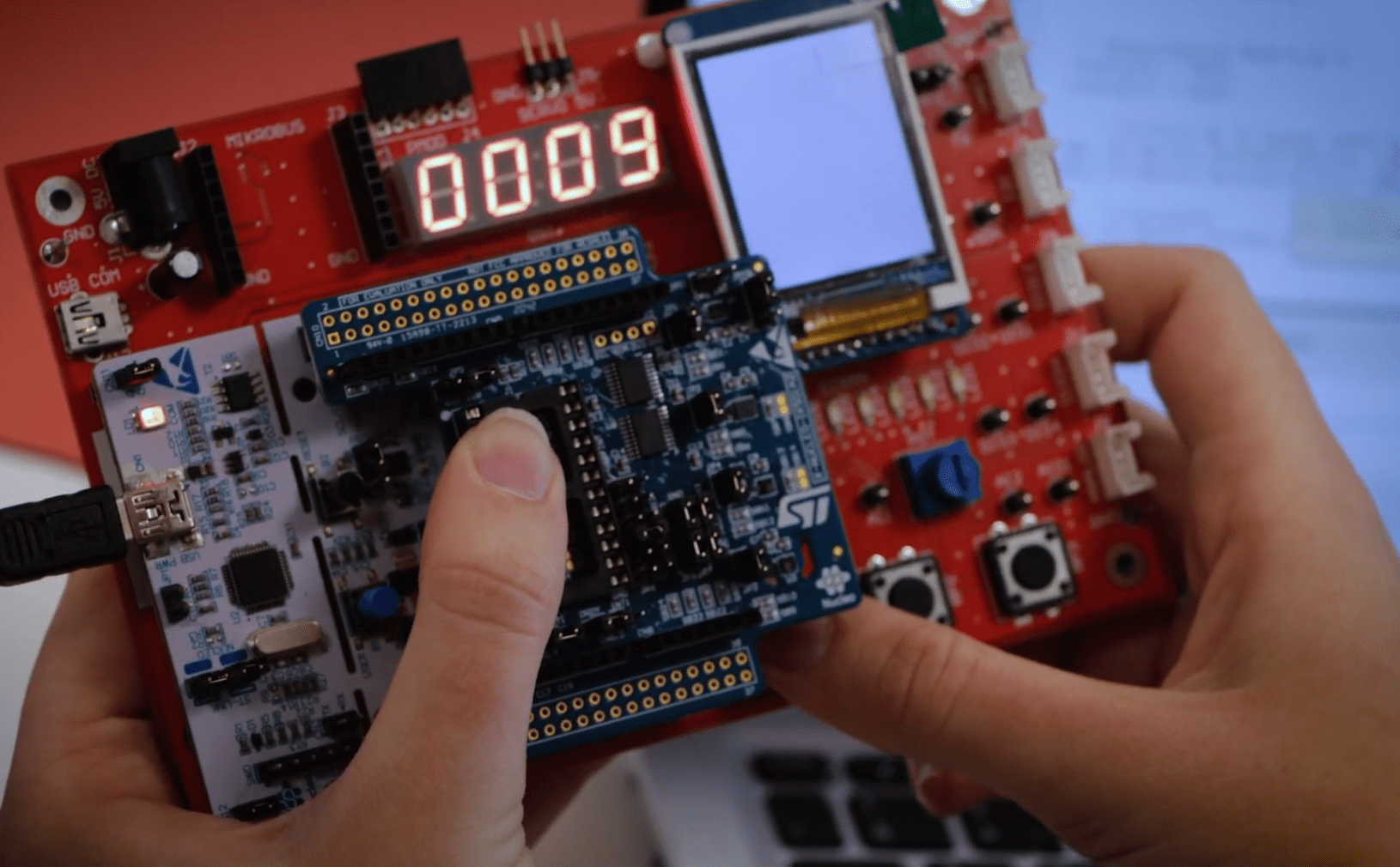
To improve reliability, the students then integrated a finite state machine (FSM), before moving on to embedded machine learning (MLC) techniques. The project explores components capable of running AI processing directly within the sensor, such as ISPU units.
This progression makes it possible to compare different approaches and better understand their respective contributions.
Recognizing tennis gestures from sensor data
The chosen application focuses on recognizing sports gestures, particularly tennis movements such as forehands, backhands, and rest phases.
To train their models, the students built datasets by recording movements from users with different profiles. This work highlights a key aspect of machine learning: the quality and diversity of data directly impact model performance.
The integration of artificial intelligence makes it possible to:
- improve detection accuracy
- simplify certain complex mathematical processing tasks
- reduce the computational load on the microcontroller
Application prospects
This type of system can be applied in various fields:
- video games, to enhance motion-based interactions
- sports, for analyzing technical gestures
- healthcare, particularly for physical activity monitoring and injury prevention
The project also highlights the value of embedded systems capable of processing data directly at the sensor level, offering gains in responsiveness and energy efficiency.
A structuring experience in the engineering curriculum
Beyond the technical aspects, this M1 project allows students to tackle real-world challenges: time management, integration issues, technological choices, and experimental validation.
It represents an important step in their training, aligned with the skills expected in engineering careers.
